The Survival Horror Challenge: Why Alien Isolation on Nightmare Difficulty Demands Everything from You
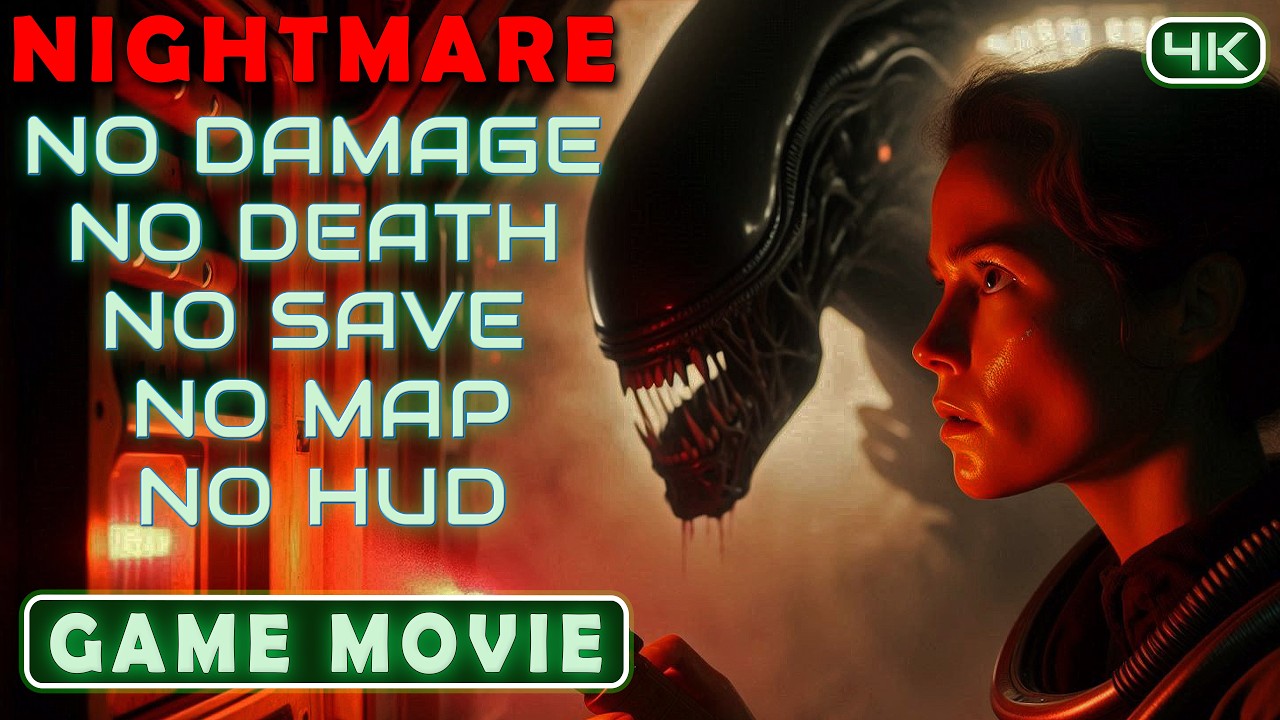
There is a breed of horror game that asks you simply to survive. Then there is the breed that demands you master every system, every sound, every shadow to even have a chance. Alien Isolation, played on Nightmare difficulty with no damage, no death, no save, and no HUD, represents the purest form of that second breed. It is not a casual walk through Sevastopol Station. It is a survival horror challenge that strips away every crutch and forces you to confront the Xenomorph on its own terms.
I have played through many horror titles over the years, but nothing has tested my patience, nerve, and tactical thinking quite like this run. The rules are simple: one mistake sends you back to the very beginning. There are no checkpoint system safety nets, no save rooms to breathe in. You rely entirely on your own wits, the motion tracker, and a deep understanding of the station's layout. The immersion is total because there is no interface telling you what to do next. You are alone.
What Makes the Survival Horror Challenge So Brutal
The core of this survival horror challenge lies in its refusal to compromise. On Nightmare difficulty, the Xenomorph is faster, more aggressive, and learns your hiding spots quickly. It does not forget. The stealth gameplay becomes a cat-and-mouse affair where one wrong footstep in the ventilation shafts can mean instant death. The audio cues are your only warning the creature is close, and without HUD elements you must interpret those sounds yourself. Is that a distant clang or something right above you? You learn to listen differently.
The no damage, no death, no save rules compound the tension. Every encounter matters. You cannot afford to trade hits with synthetics or waste flamethrower fuel on a panic blast. The flamethrower becomes a precious resource, not a weapon but a last resort. You learn to use it only when the Xenomorph is inches away and you have no escape route. Even then, one misjudgment on the timing and you are dead, sent back hours to the start.
Immersion Through Absence
Removing the HUD is one of the smartest design choices for this kind of run. No health bar, no ammo counter, no objective marker. You have to remember where you hid the medkit, how many revolver rounds you used, and which door leads to the transit hub. The motion tracker becomes your only digital companion, and even that is a limited tool. It beacons when the creature is near, but it also drains battery. You must weigh the risk of using it against the risk of going blind.
Cinematic 4K visuals help this approach immensely. The detail on Sevastopol Station is stunning, every flickering light and blood-smeared wall adding to the psychological terror. When you play without a HUD, the environment itself becomes the interface. You read the station's layout by its architecture, not by a map overlay. The immersion is so deep that after a few hours you stop thinking about the game as a game. It becomes a real space you are navigating.
Ripley's Journey, Your Responsibility
Playing as Amanda Ripley feels different under these conditions. In a normal playthrough she is a character you guide. Here, she is an extension of your own fear. Every time she breathes heavily after a sprint, you feel that exhaustion. Every time she fumbles a reload, you curse your own haste. The psychological terror of Alien Isolation works because the game makes you responsible for every action. There is no one to blame but yourself when the Xenomorph drops from a vent and drags you into the shadows.
The no save rule changes how you approach every room. In a typical horror game you might rush through a corridor, knowing you can reload a checkpoint. Here, that corridor could end your entire run. You learn to move slowly, to peek around corners, to use the motion tracker from a safe distance. You also learn when to hide and when to run. The game's AI is smart enough to check hiding spots it has seen you use before, so you cannot rely on the same locker twice.
Practical Lessons from the Run
After spending dozens of hours on this survival horror challenge, several strategies emerged that I wish I had known from the start.
- Always have a backup route in mind. The Xenomorph will cut off your primary path, so know the ventilation shafts and alternate corridors before you need them.
- Use the motion tracker sparingly. Each ping reveals your location to the creature. Sometimes it is better to use audio cues alone.
- Conserve flamethrower fuel for emergencies. It is the only weapon that can drive the Xenomorph back, but it runs out fast. Use it only when you have no other option.
- Learn the save room locations even though you cannot use them. They become landmarks for navigation and safe zones to plan your next move.
- Stay patient. Rushing is the number one cause of death. Wait, listen, and move when the creature is on the other side of the station.
These are not tips for a casual playthrough. They are survival tactics for a run that punishes every mistake. The checkpoint system in the standard game offers forgiveness. Here, there is none. You must treat every encounter as if it is your last chance, because it might be.
The Psychological Toll
What surprised me most was the mental fatigue. After several hours of sustained tension, your decision-making starts to slip. You forget to check the motion tracker. You walk into a room without scanning the ceiling vents. The Xenomorph exploits these lapses ruthlessly. The psychological terror of Alien Isolation is not just about jump scares. It is about the slow erosion of your confidence. You start second-guessing every choice. Is that the right door? Did I hear the creature or was it the station's ambient noise?
The no HUD element adds another layer of disorientation. Without a compass or objective marker, you rely on memory and landmarks. You learn to recognize the graffiti on a wall, the flicker pattern of a broken light. Sevastopol Station becomes a real place in your mind, mapped not by a menu but by lived experience. That kind of immersion is rare in games. It is the kind that stays with you after you finish, that makes you jump at shadows in your own home.
Why This Matters
Playing Alien Isolation under these extreme conditions is not for everyone. It requires patience, discipline, and a willingness to fail repeatedly. But for those who complete it, the reward is a sense of mastery over one of the most terrifying games ever made. The survival horror challenge transforms the game from a scripted experience into a personal trial. You do not just finish the game. You survive it.
The stealth gameplay becomes second nature. You learn to read the Xenomorph's behavior, to predict its patrol routes, to use the environment as a weapon. The motion tracker is no longer a gadget but an extension of your own senses. The flamethrower is not a weapon but a last prayer. Every tool in your kit takes on new meaning when the stakes are this high.
In the end, the run is about more than just completing a game. It is about proving to yourself that you can endure the worst this genre has to offer. The psychological terror of Alien Isolation is legendary, but facing it on Nightmare difficulty with no safety net is a different beast entirely. It is a test of character, a marathon of fear, and a journey into the heart of survival horror itself.
Ends · MYSURVIVALHORRORCHALLENGESHOP